
Delhi, the capital city of India, is a fascinating blend of history, culture, spirituality, and modern life. From majestic forts to serene gardens, Delhi offers something for every traveler. If you’re planning a trip, here are the top 10 places to visit in Delhi, along with essential travel tips.
Red Fort
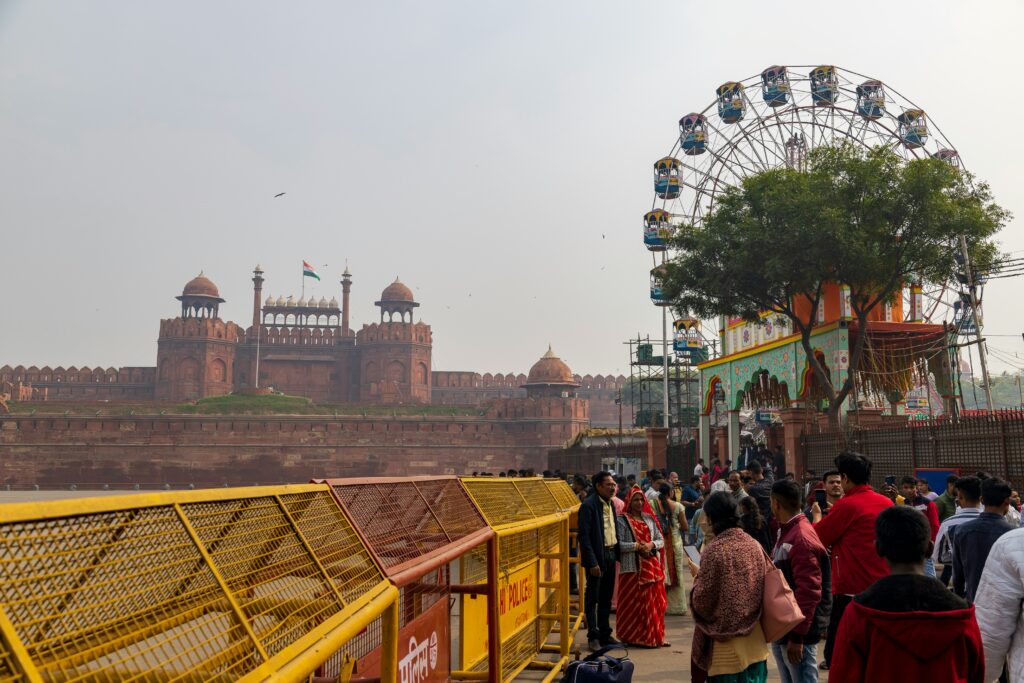
Red Fort, also known as Lal Qila, was constructed in 1639 by Mughal Emperor Shah Jahan as the palace fort of his new capital, Shahjahanabad (Old Delhi). It served as the political and ceremonial centre of the Mughal Empire for over 200 years.
The fort’s red sandstone walls, intricate marble inlay work, and ornate gates exemplify Mughal architecture and grandeur.
Inside, it houses palaces, audience halls, and gardens that showcase India’s rich cultural heritage. It was declared a UNESCO World Heritage Site in 2007 for its historical and architectural significance.
Best Time to Visit
Early Morning (8 AM – 10 AM): Avoid crowds and capture great photos.
Evening (6 PM – 7 PM): Light and sound shows narrate Mughal history beautifully.
What to do
Visiting the Red Fort is like stepping into Mughal history. Begin at the Lahori Gate, admire the massive red sandstone walls, and explore the Diwan-i-Aam and Diwan-i-Khas to see the emperor’s audience halls. Stroll through the gardens, walk along the ramparts for views of Old Delhi, and visit the museums to learn about Mughal culture. End your visit with the evening light and sound show, or step into nearby Chandni Chowk to enjoy famous street food like parathas and jalebi.
How to Reach
- Metro: Lal Qila Metro Station (Violet Line) to 5-minute walk to the main entrance.
- By Auto / Cab: Easily accessible from Chandni Chowk, Connaught Place, and Old Delhi railway stations.
- Parking: Limited inside; better to park outside Chandni Chowk and walk.
2. Jama Masjid
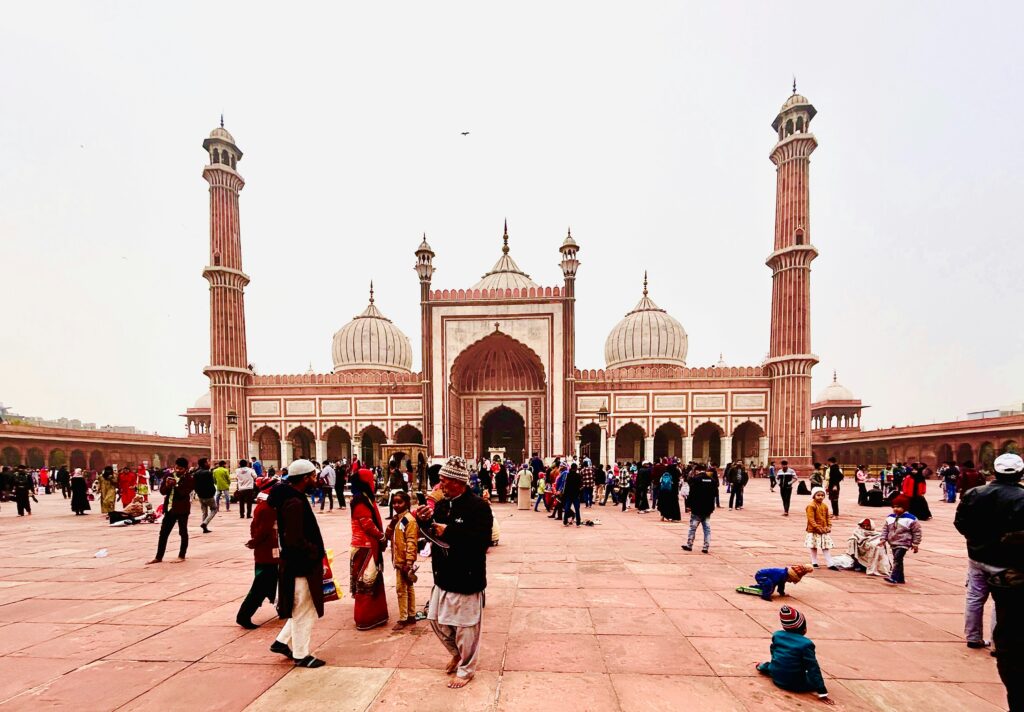
Constructed by Shah Jahan in 1656, Jama Masjid is India’s largest mosque. Its grand domes, two towering minarets, and expansive courtyard showcase Mughal architectural brilliance. It has been a central place of worship and a symbol of Delhi’s cultural and spiritual life for centuries.
Best Time to Visit: Early morning (7–9 AM) or evening (5–7 PM) for peaceful exploration.
What to Do
Climb the southern minaret for breathtaking views of Old Delhi and Chandni Chowk, explore the vast courtyard, and witness the serene atmosphere of this historic mosque. Observe daily prayers and the mosque’s architectural details, including intricate carvings and marble inlays. Early morning visits offer a peaceful experience, while evenings are lively with locals and tourists alike.
How to Reach
- By Bus: Several DTC buses stop near Chandni Chowk.
- By Metro: Take the Violet Line and get off at Jama Masjid Metro Station. From there, it’s about a 5–10 minute walk to the mosque.
- By Auto / Cab: Easily accessible from Red Fort, Chandni Chowk, or Delhi Gate. Autos are convenient for navigating the narrow lanes.
3. Qutub Minar
Qutub Minar, built in 1193 by Qutb-ud-din Aibak, is the tallest brick minaret in the world. The minaret represents Indo-Islamic architecture with intricate carvings and inscriptions from the Quran. The Qutub complex also includes the Quwwat-ul-Islam Mosque and the Iron Pillar, reflecting Delhi’s rich medieval history.
What to Do :
Explore the Qutub Minar complex, photographing the 73-meter tall minaret. Visit the Quwwat-ul-Islam Mosque and see the Iron Pillar, famous for resisting corrosion for centuries. Walk among the ruined structures, gardens, and historic tombs, and learn about Delhi’s Sultanate-era architecture through plaques or guided tours. Ideal for history buffs and photographers.
Best Time to Visit: Morning (8–11 AM), October to March.
What to Do: Explore Qutub complex, Quwwat-ul-Islam Mosque, and the Iron Pillar; photography enthusiasts will love the intricate carvings.
How to Reach:
- Metro: Qutub Minar Metro Station (Yellow Line) → 10-min auto ride
Nearby Food: Local cafés near Mehrauli, small street vendors